
Sweep a strip
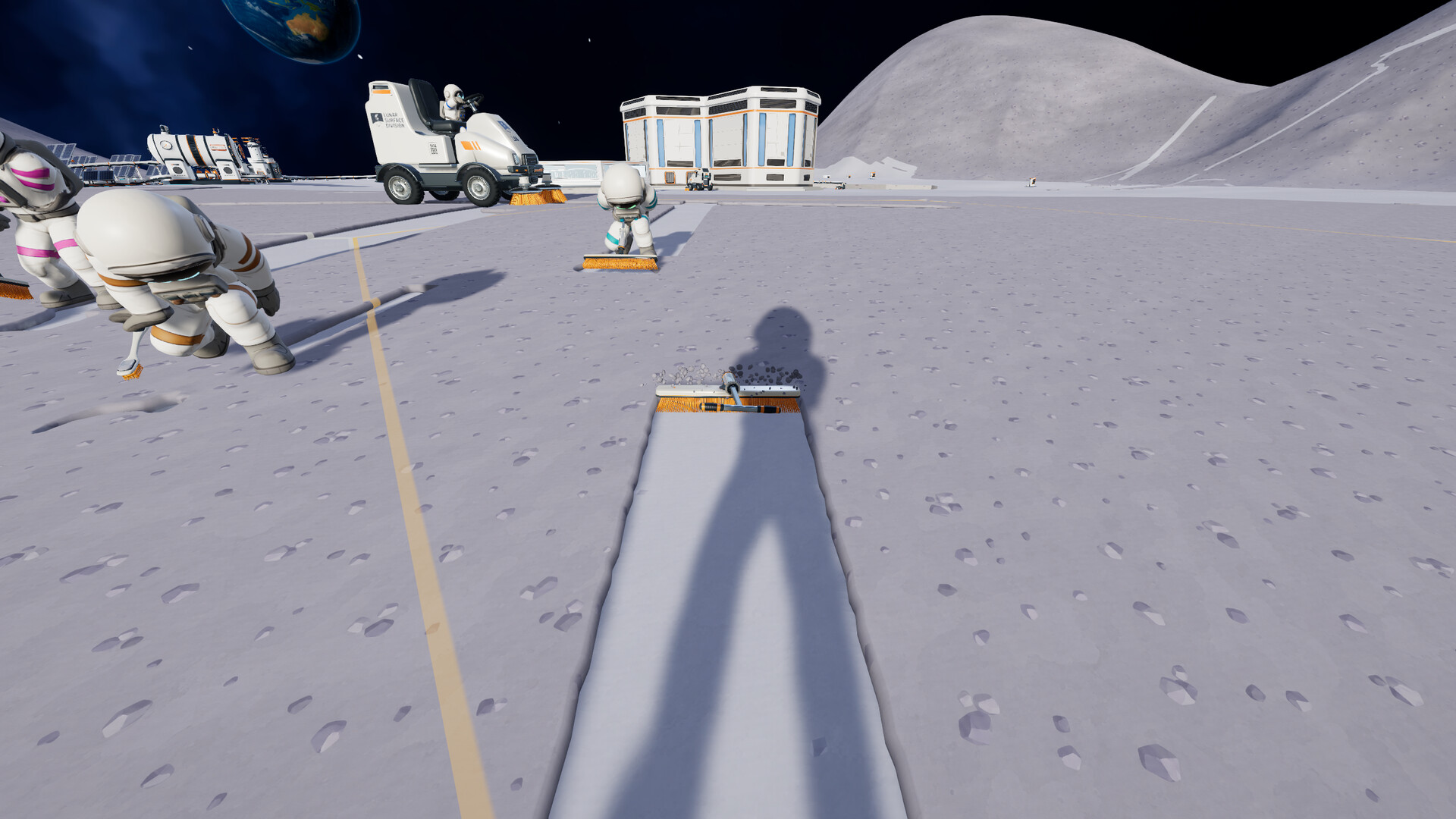
The terrain visibly turns clean behind the brush, and the game tracks how much of the surface you have covered. A pass is arm-width at the start — measured against the whole Moon, that is nothing.
// Lunar Surface Department · Contract 001
Moon Sweepers is a first-person cleaning and logistics game. You scrub regolith off the surface with hand tools, haul it to a depot, launch it as a shipment, and spend the money on wider brushes, bigger containers, and eventually vehicles that sweep without you. Solo or with up to sixteen people on the same patch.

// Sector index
Every section below covers a different system. Start with the dust loop if you have never played — it is the only one that gates all the others.
The core loop: sweep, fill the canister, walk it back, repeat. Where the time actually goes.
02 SECTOR /TOOLSWidth beats capacity. Which upgrade step changes your sweep rate and which one just delays the walk.
03 SECTOR /LOADCanister size, capsule drops, and the point where a bigger container stops paying for itself.
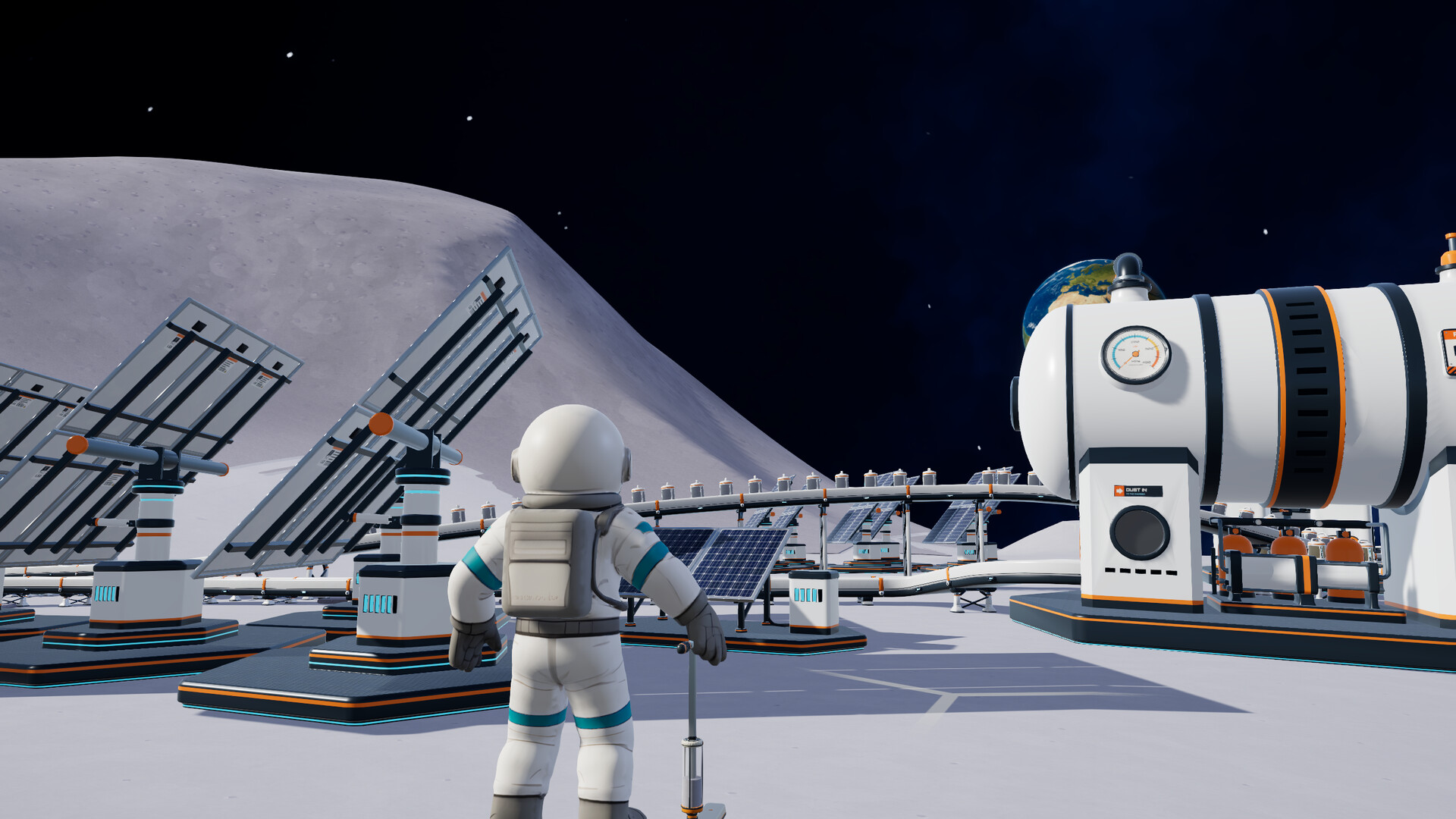
04 SECTOR /ECONPlacement, payout multipliers, and why a depot near the working face outscores any tool.
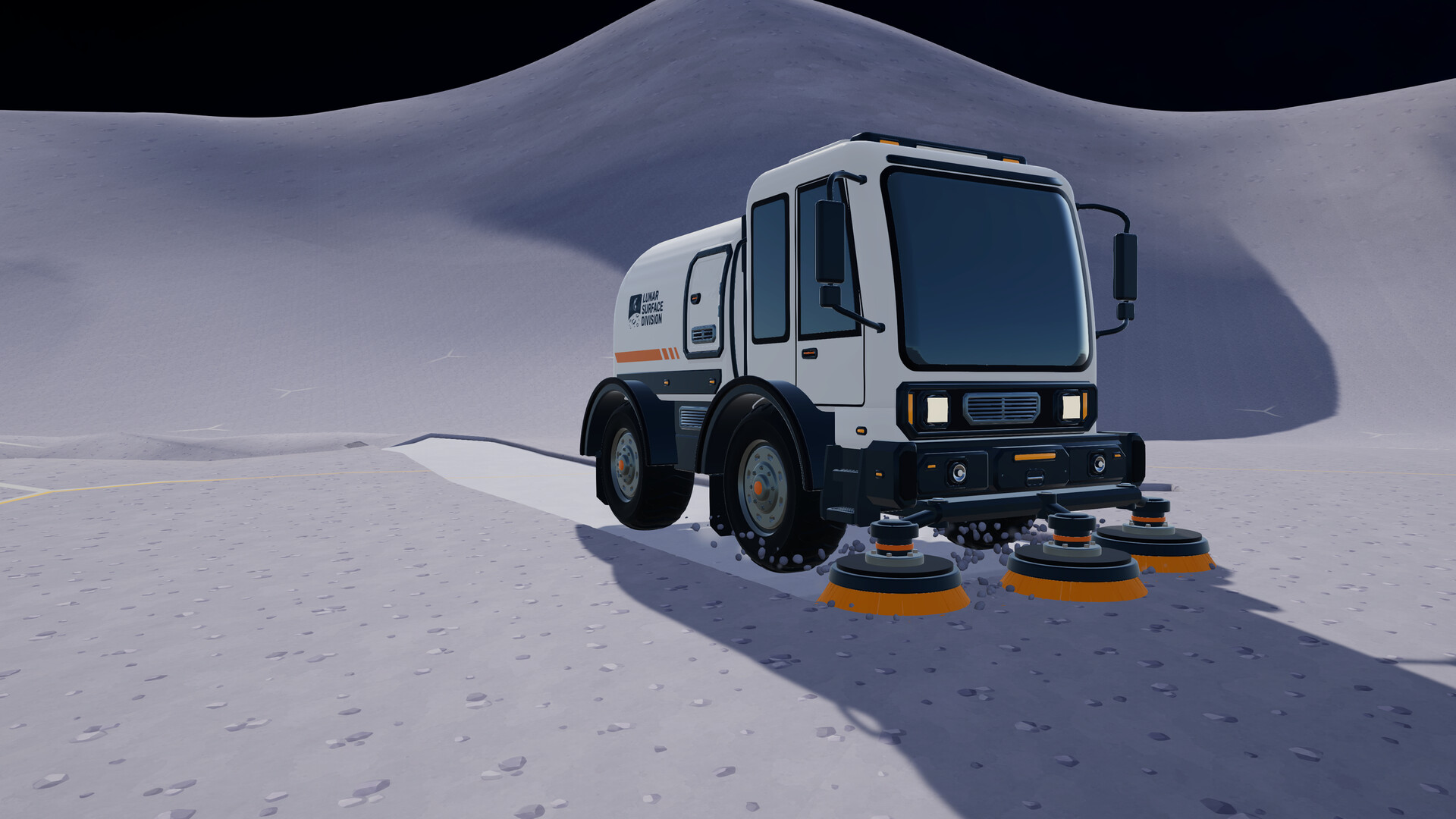
05 SECTOR /FLEETPush sweepers, autonomous roamers, conveyor links. When to stop upgrading the brush.
06 SECTOR /TERRAINProgress tracking, strip planning, and the edge cases that make a brush ride up a panel.
07 SECTOR /CREWHow a lobby splits a patch, and what changes when someone else hauls the capsules.
08 SECTOR /SPECSMinimum and recommended, plus the one line that surprises people: broadband is required either way.
09 SECTOR /LAUNCHLaunch date, store features, controller support, and what is confirmed versus still unannounced.
// The loop
The store copy states the cycle plainly: collect dust, deliver it to a depot, launch shipments, spend the earnings on tools and capacity. In practice the second half takes longer than the first.
The terrain visibly turns clean behind the brush, and the game tracks how much of the surface you have covered. A pass is arm-width at the start — measured against the whole Moon, that is nothing.
Dust accumulates in the brush's own container. When it is full you stop earning, and the only way to start again is to walk it somewhere that accepts it.
Depots are player-placed, so the distance between your working face and your payout is a decision you make, not a fixed map rule. This is the single highest-leverage choice in the early game.
A shipment pays out on the whole load. Payout percentage upgrades apply to the full launch, which means they compound with every capacity and width step you already bought.
// Upgrade doctrine
Two upgrade lines sit next to each other and look equally useful. They are not. Widening the brush head raises how much dust you strip per second of scrubbing. Enlarging the container only raises how long you scrub before the walk back.
Width compounds with itself — every strip you finish is finished faster, and the time saved is spent starting the next one. Capacity compounds with nothing: it moves the same walk later in the session.
A bigger canister is a shorter queue at the depot. A wider brush is a shorter job.
Capacity does become correct at one specific moment: when a single pass fills the canister before you reach the depot anyway. Below that threshold you are paying for storage you never use.
Full tool ladder// Progression console
Tools, vehicles, and economy rules in one table. Search by name, or narrow it to a single class.
// Crew doctrine
The store page confirms online co-op lobbies of up to sixteen players. It does not confirm split objectives, per-player payouts, or dedicated servers — those are unannounced, and this site does not guess at them.
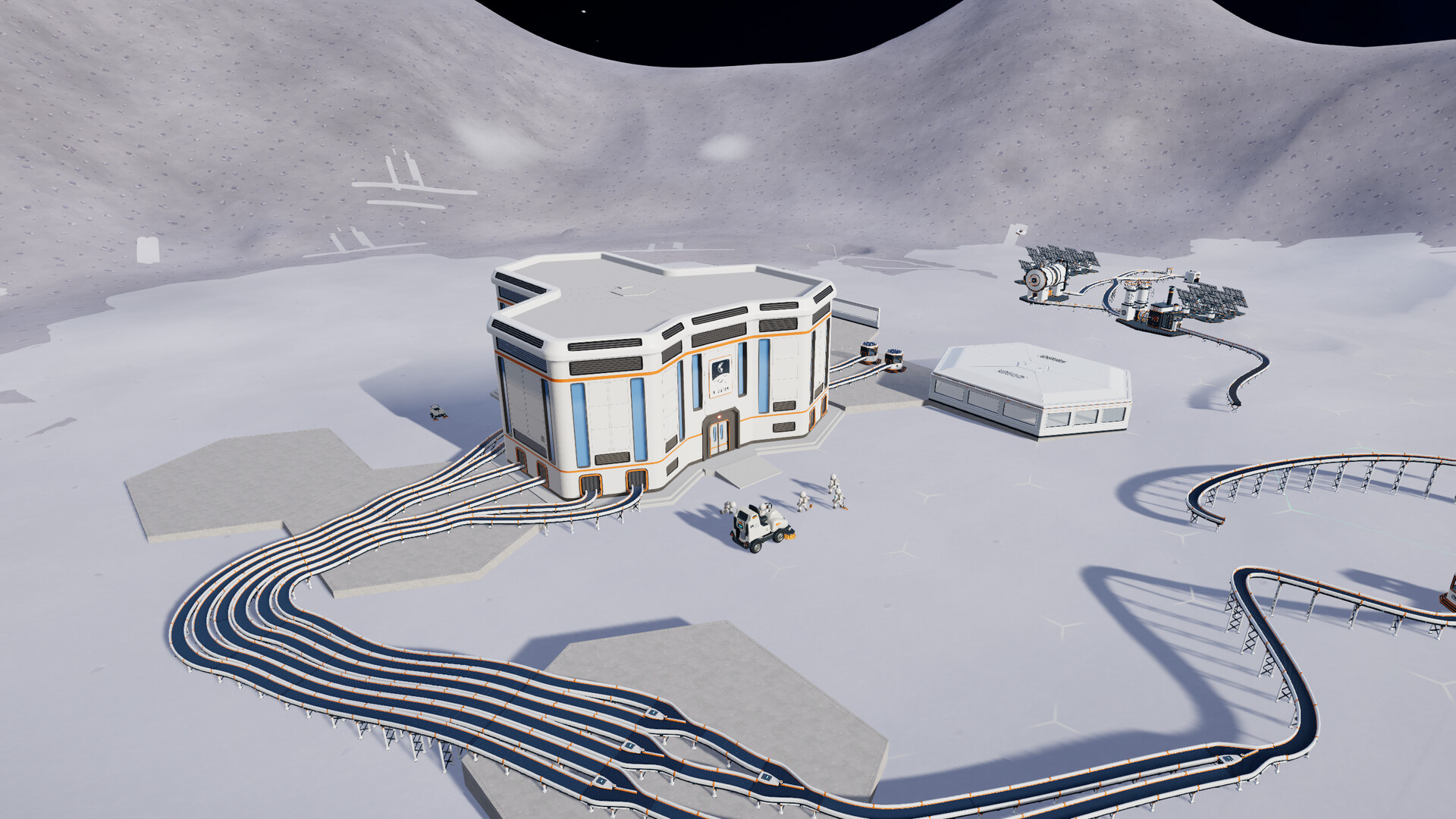
What the design does imply is role separation. Dust travels in capsules that can be set down and picked up, which means one player can scrub a face while another runs the haul. The person sweeping never has to leave the strip.
That only works if the sweep is planned. Two players working the same seam cross paths constantly; two players working opposite edges of a strip finish it without ever meeting.
Crew planning// Field dispatch
One recorded session runs from the issued toothbrush to the first automated vehicle over roughly five hours. The dispatch walks that arc in the order it happened.
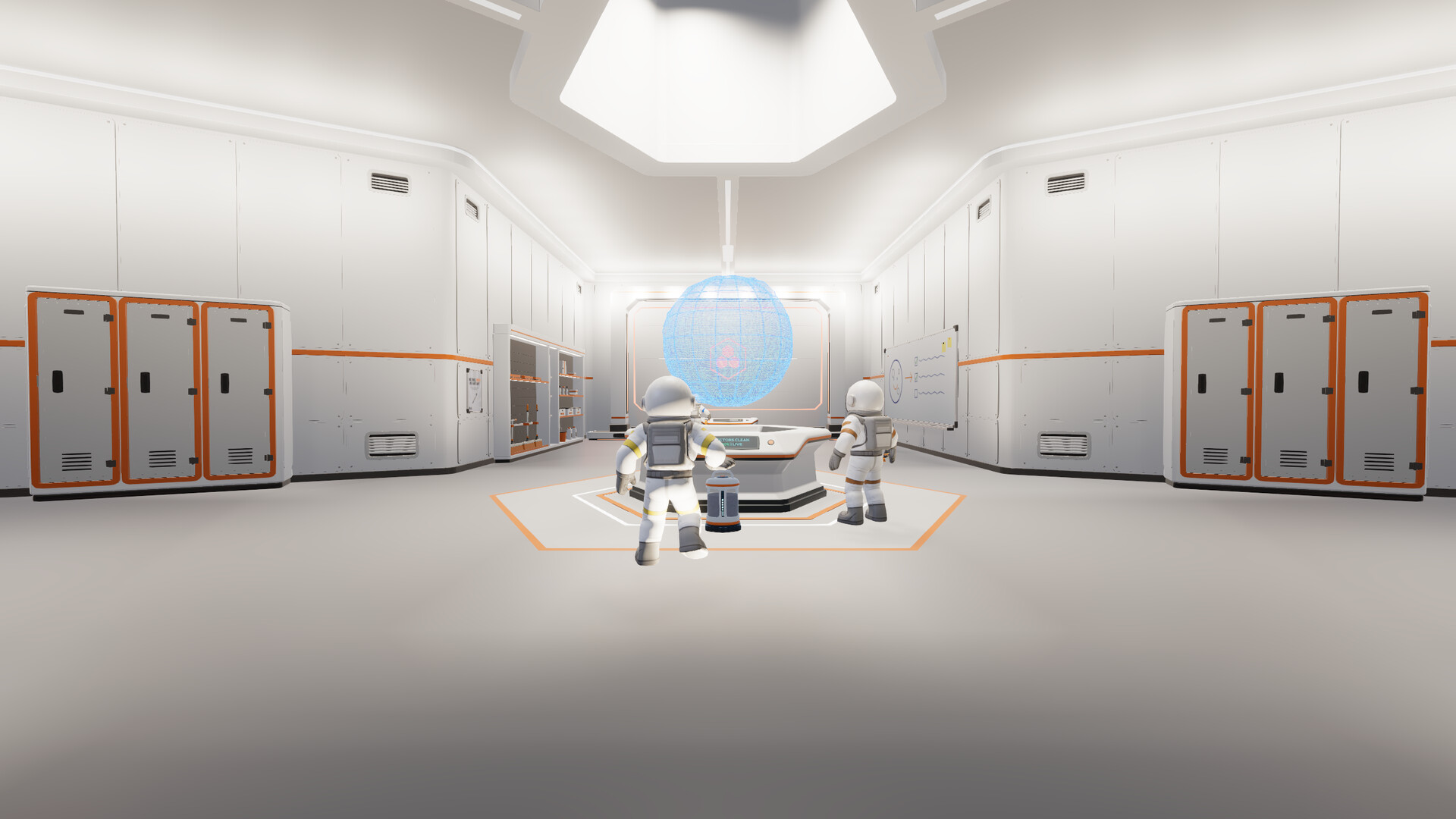
What actually happens between the toothbrush and the first autonomous sweeper — the money curve, the detours, and the upgrade that was not worth it.
Read the dispatch →