
// Sector /dust · guide
Lunar dust: the collection loop that pays for everything else
Sweeping is the easy half. What decides your earnings per hour is width, container size, and how far you chose to walk.
The loop, in plain terms
The store page states the cycle without decoration: collect lunar dust, deliver it to a depot, launch shipments to get paid, and spend the earnings on better cleaning tools and more carrying capacity so you can take on bigger jobs between deliveries. Four steps, one of which is cleaning.
That last part is what most new players misjudge. The brush is the input device, not the game. What actually decides how fast a contract advances is how much dust leaves the surface per hour, and that number is governed by three separate limits: sweep width, container size, and the distance to whatever accepts your load.
Sweeping itself is generous. A pass visibly turns the terrain from dusted to clean behind the brush, and the surface keeps a running record of how much you have covered, so you always know whether the last hour did anything.
Sweep width sets the ceiling
Everything else in the economy multiplies against your sweep rate. If the brush covers a narrow strip, no amount of storage or payout bonus changes the fact that a square metre of regolith takes a fixed amount of scrubbing time.
This is why the first upgrade that matters is the one that widens the head. In a recorded session the widening step raised the cleaning head by roughly eight percent per purchase, and the player running it treated that as the only line worth buying early. Container upgrades, by contrast, were described as simply increasing the dust container size, which matches what the interface showed.
Storage decides how often you stop. Width decides how long you have to work before stopping matters.
Container size sets the rhythm
Dust accumulates inside the tool until it is full. When the container fills, collection stops, and the only way to restart it is to move the load somewhere that converts it into money. Container size is therefore a timer, not a throughput figure.
A larger container means fewer interruptions, and interruptions are expensive precisely because of the third limit: distance. If your depot sits two minutes away, doubling your container halves the number of two-minute walks. If the depot sits ten seconds away, doubling the container saves you almost nothing.
There is a threshold where container upgrades flip from useless to mandatory, and it is the moment a single continuous pass no longer fits in the canister before you reach the payout point. Below it you are paying for space you never touch. Above it you are losing time on every trip.
Distance is a purchase, not a fact
Depots are placed by the player, and the store copy explicitly recommends putting them near your work. That one sentence reshapes the early game: the walk back is something you decide with money and planning, not a fixed property of the map.
A player who drags a load across the surface for two minutes every trip has effectively bought a smaller container and a slower brush at the same time. A player who places the depot at the edge of the working face banks a modest container far faster than a distant one.
What a full session actually looks like
In the recorded run this page draws on, the opening phase is not efficient and does not pretend to be. The first trips are short, the canister fills quickly, and the earnings per trip are small. What bends the curve is not one big purchase but the point where the player stops sweeping for its own sake and starts sweeping in strips that end near the depot.
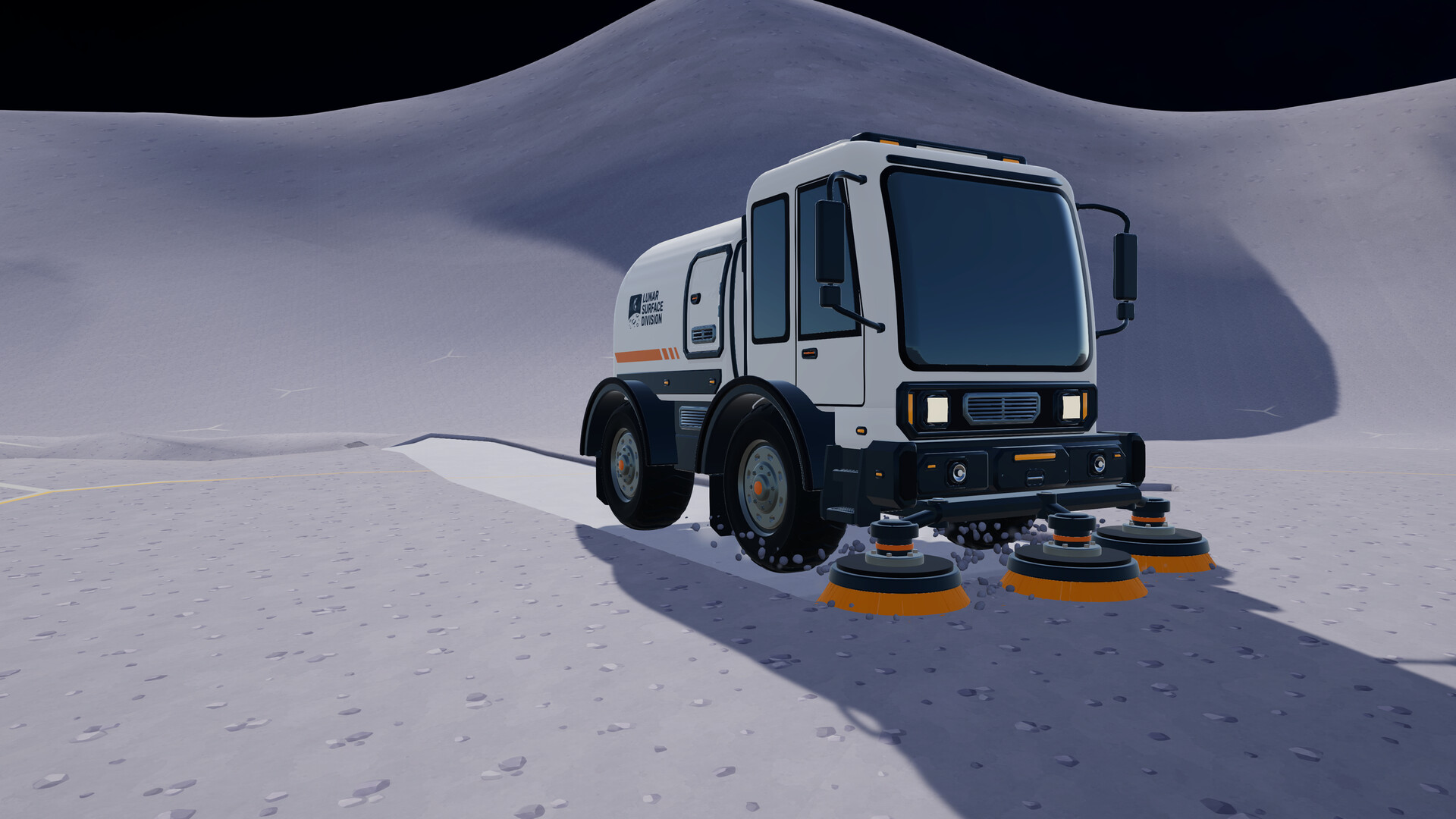
By the fifth hour the session has moved through hand tools, a series of widening upgrades, a depot routine, and at least one automated vehicle. That arc is walked through step by step in the first dispatch.
Why the first hour feels slow on purpose
The opening tool is a toothbrush, and that is a design statement rather than a balance accident. A brush narrow enough to be comic makes the first upgrade feel enormous, and it makes the later vehicles feel like liberation rather than convenience.
It also forces you to learn the loop at a pace where you can see it. A player who started with a wide head would never notice the interaction between fill rate, trip length, and lane length, because none of them would bind for hours.
So the slow start is the tutorial. What it teaches is not the controls but the economics, and the lesson only lands because the brush is bad.
The three numbers to watch
Everything else on this page reduces to three measurements, and a player who tracks them will out-earn a player who does not, without any additional skill.
| Figure | How to measure it | What it controls |
|---|---|---|
| Fill time | Seconds from empty canister to full | How often you stop cleaning |
| Trip time | Seconds from full canister to depot and back | What each stop costs you |
| Payout per shipment | Money received per launch | What the whole cycle is worth |
Income per hour is roughly payout divided by the sum of fill time and trip time, multiplied by the number of cycles. Every upgrade in the game moves one of those three numbers, and an upgrade that moves none of them is decoration.
That single formula also explains the whole upgrade doctrine on this site. Width reduces fill time. Capacity reduces trip count. Depot placement reduces trip time. Payout upgrades raise the numerator. Nothing else is on the list.
What happens when you ignore the walk
The most common way to lose an hour in this game is to keep sweeping with a full canister nearby. The brush stops collecting, the terrain stops changing, and the player keeps moving because the animation still looks like cleaning.
Because cleaned and dusted terrain are distinguishable, this is recoverable: if the ground behind the brush is not changing, the canister is full. The recording behind this manual shows this happening more than once, and each occurrence costs minutes before the player notices.
The habit that prevents it is a glance at the container as part of every turn, the same way you check a mirror when driving.
How the loop changes with a crew
In a lobby, the walk disappears from the sweeper's job. Someone else carries, and the sweeper's personal formula loses the trip-time term entirely — fill time divided into payout is close to their whole cycle.
That changes which upgrade is best. Solo, capacity matters because it reduces trips. In a crew with a hauler, capacity barely matters for the sweeper, and width is worth more than ever because it now acts on an uninterrupted cycle.
So the same question — what should I buy — has two different answers depending on whether the walking is yours.
Practical order of operations
- Sweep a strip, not a field. Finish one lane end to end before starting another. Partial coverage across a wide area produces no shipment and no visible progress.
- Put the depot where the strip ends. Placement is cheap to change early and painful to change late.
- Buy width before storage. Width raises the rate at which dust enters the container; storage only changes when it leaves.
- Re-check the container once your strip gets long. That is when capacity starts paying back.
Next: the full tool ladder, or how the payout side works.