
// Sector /crew
Sixteen players, one dust field
The confirmed fact is a sixteen-player online co-op lobby. The useful question is what those sixteen people should each be doing.
// What is confirmed
Sixteen slots, one cleaning contract
The store listing states online co-op lobbies of up to sixteen players, alongside single-player and a Steam single-player category. Everything on this page is built on those two confirmed facts plus the mechanics the store copy describes.
What the listing does not publish: dedicated servers, per-player payouts, shared or separate upgrade pools, or whether progress is hosted or peer-driven. Those are unannounced, and no amount of deduction turns them into facts.
Why sixteen makes sense for this game
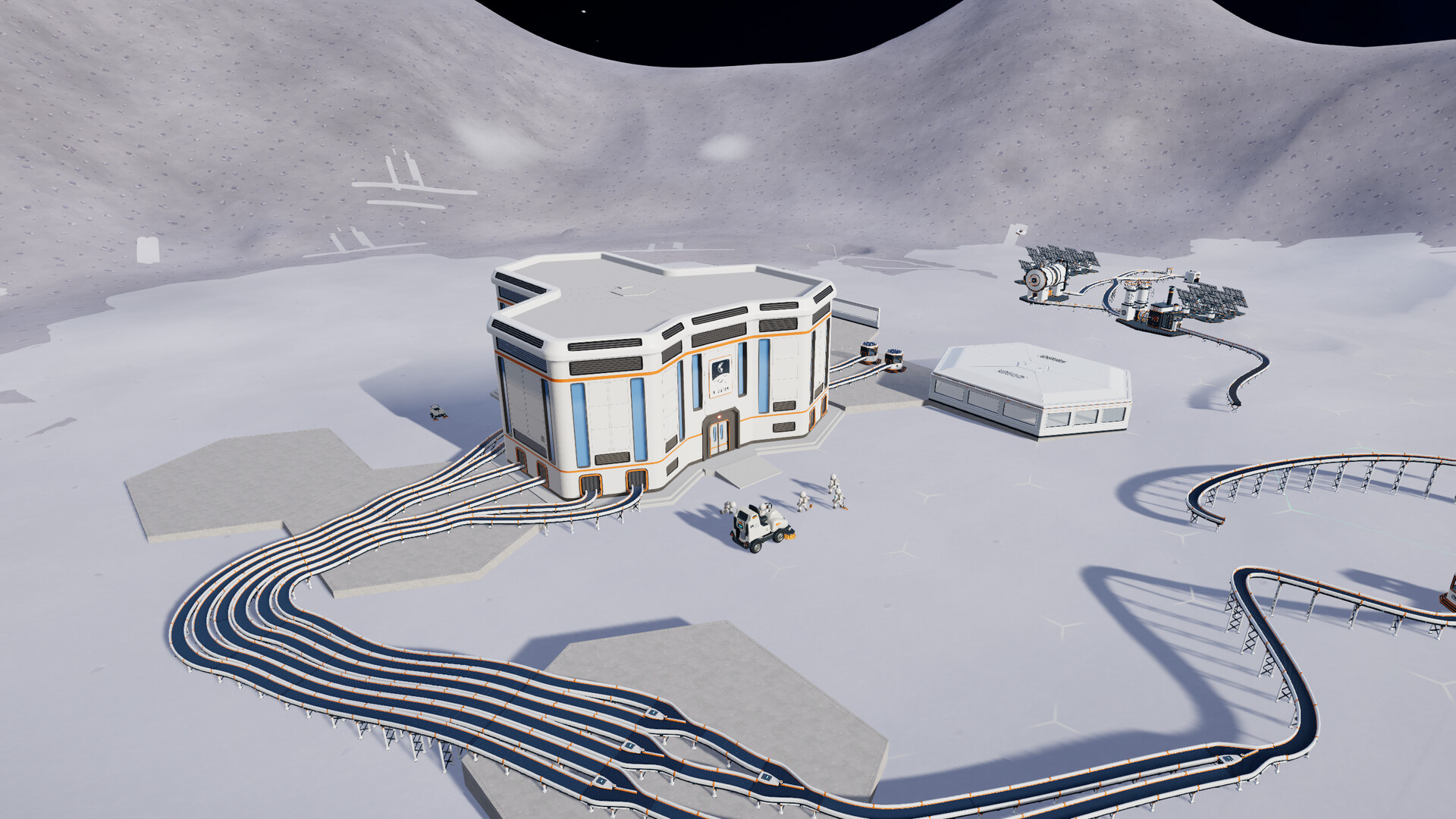
Moon Sweepers is not a combat game with a player count. It is a cleaning and hauling operation on an open lunar surface, and the store copy is explicit that dust travels in capsules which can be carried, dropped, and picked up again.
That mechanic is what a large crew is for. When cargo can be set down, work splits into roles that do not need to stand next to each other: one player scrubs a face, another collects filled capsules, a third runs them to the depot, a fourth launches shipments. Sixteen people is roughly the number at which those roles can be staffed on several working faces at once.
A big crew does not clean faster. It keeps the sweeping players sweeping.
The three roles a crew actually needs
Sweepers
The rate-determining role. Sweepers own the brush upgrades and the strip plan. Their job is to never stop scrubbing: no depot runs, no capsule hunting, no detours. Everything else exists to protect this.
Haulers
Collect filled capsules from the strip and move them to the depot. This role needs no upgrades at all to be useful — the value is entirely in the walk it removes from someone else. A hauler is the cheapest efficiency upgrade in a co-op session, because it costs the crew nothing but one player's attention.
Logistics
Depot placement, shipment launches, and eventually vehicles and conveyors. This is the role that scales: an autonomous sweeper or a conveyor link multiplies the whole crew rather than one player's rate.
Splitting the surface
The most common failure in a large crew is overlap. Two players sweeping the same seam cross paths constantly, produce no additional coverage, and generate a continuous stream of small collisions in the brush's cleaning path.
The fix is spatial, not social: assign lanes rather than areas. A lane has a start, an end, and a direction, so two players can be given adjacent lanes and never need to coordinate again. Areas require ongoing negotiation because nobody can tell where the boundary is mid-scrub.
Because cleaned terrain is visibly different from dusted terrain, a crew can see its own coverage without a map screen. That is the coordination tool the game gives you — use it instead of voice chat.
What a large lobby does to the economy
Shipments are launched from depots and paid on the whole load. If a crew pools its dust before launching, each shipment is larger, and any launch percentage bonus applies to a bigger number. That is the mechanical argument for hauling rather than every player running their own depot trip.
The counter-argument is overhead: coordinating a pool costs time and attention. In practice the right answer depends on whether payouts are shared, which the store listing does not state. Until that is known, treat pooled shipments as an experiment to run in your first session rather than a rule.
Practical crew setup
- Assign lanes, not regions. One lane per player, adjacent where possible.
- Nominate one hauler before anyone starts sweeping. The role is worthless if it is everyone's second job.
- Place the depot once, centrally. Per-player depots fragment the cargo flow.
- Test one pooled shipment early and watch whether the payout reflects the whole load.
- Move a sweeper to logistics as soon as vehicles are affordable; that is where a crew's money compounds.
Why a large crew changes the upgrade maths
In solo play, width is the best purchase because it raises the rate at which you personally produce cargo. In a crew, width is still good, but it competes with a purchase that solo players never have: a hauler.
One player dedicated to hauling raises the effective cleaning time of every sweeper in the lobby. That is a multiplier on the whole group's output, and it costs nothing in currency — only one player's attention. No upgrade in the game has that ratio.
The corollary is that a crew with nobody hauling is not a big solo session; it is several solo sessions running in parallel and interfering with each other.
Communication that does not need voice
The terrain state is the communication channel. Cleaned ground is distinguishable from dusted ground, so a crew can see who has been where without saying anything.
Two conventions cover most of what a crew needs:
- Leave an uncleaned seam between adjacent lanes. The seam is a boundary both players can see, and it disappears naturally when the lanes meet.
- Drop capsules where they are visible. A capsule in the middle of a clean lane is a signal; one at the far edge of a working face is a thing everyone forgets.
What a sixteen-player lobby is actually for
Not sixteen people sweeping. The surface is large enough that sixteen players sweeping adjacent lanes would clear a modest section and then spend the rest of the session travelling.
The number makes sense as a ratio: several working faces, each with a sweeper or two, plus enough haulers to keep them scrubbing, plus one person on logistics. That is a dozen players spread across the Moon with the rest in reserve, and it only works if the lanes were assigned before anyone started.
Crew setup checklist
- Assign lanes before the first brush stroke. Retrofit assignment is always slower than upfront assignment.
- One hauler minimum, chosen before sweeping starts, not after someone complains.
- One depot, central to the working faces, not one per player.
- One logistics player who owns vehicle and conveyor purchases once they are affordable.
- Test pooled shipments once and record whether the payout reflects the whole load.
Related: capsules and capacity, or the network requirement on the spec page.